
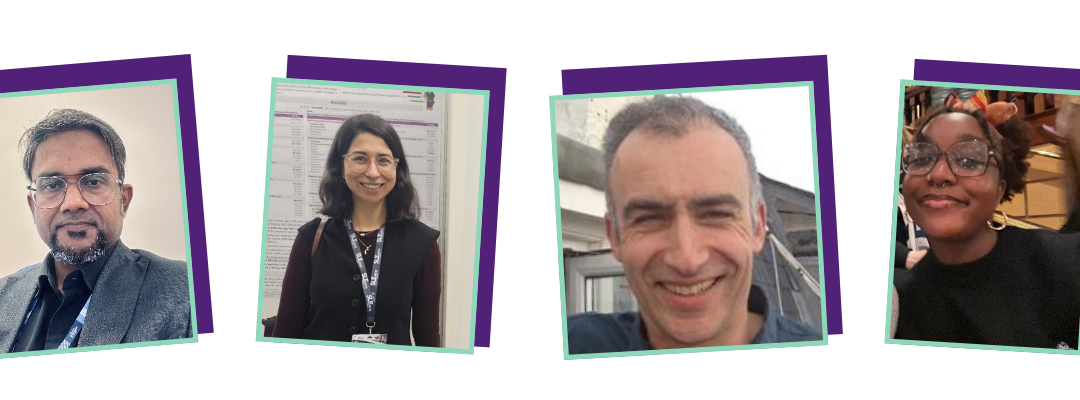
Ever wondered who’s behind some of the lupus research you hear about? Meet four of the people working on the STRATIFY Lupus trial, including researchers, rheumatologists and a trial manager. From hopes for more personalised treatment to a love of acrobatics, they tell us about their work and life outside it.
Dr Shipa Muhammad (Rheumatologist and Researcher)

Meet Dr Shipa Muhammad
What does your role involve day to day?
I am a rheumatologist and researcher, so my time is divided between looking after people with lupus and research. Much of my research comes directly from questions arising in the clinic, particularly why lupus behaves so differently between individuals and how we can make treatment more personalised.
What would surprise people about your job?
Perhaps how closely clinical care and research are connected. Many of our research questions start with conversations in clinic or something we observe in an individual patient. Equally, what we learn through research can change how we think about patients and their treatment.
How did you come to work in lupus research?
I became interested in lupus because of its complexity. The same diagnosis can look remarkably different from one person to another, and treatment responses can be equally varied. Looking after people with lupus made me want to understand the biology behind those differences and use that knowledge to improve care.
What are you working on at the moment?
My research focuses on understanding why lupus behaves differently from one person to another, including why disease severity and treatment responses can vary across ethnic groups. I am particularly interested in lupus in Black patients. I also work on STRATIFY Lupus, which aims to help us choose treatments more precisely for individual patients.
Who else works alongside you to make a study happen?
Clinical research is a huge team effort. Doctors and nurses are only part of it. Trial managers, laboratory scientists, statisticians, pharmacists, research practitioners and many others all contribute. Most importantly, people living with lupus work alongside us, helping ensure that our research asks the right questions and is practical to deliver.
What questions do people often ask you about taking part in research?
People understandably want to know why a study is being done, what taking part will involve, and whether it will affect their usual care. I think asking questions is incredibly important. Taking part in research should always be an informed choice, with people feeling comfortable about what participation means for them.
What difference has hearing from people with lupus made to your work?
It has shaped both the questions I ask and how I think about meaningful improvement. Laboratory tests and disease activity scores are important, but they do not always capture the full impact of lupus. Listening to patients keeps our research focused on outcomes that genuinely matter in everyday life.
What would you like people with lupus to know about research or research teams?
I would like people to know that they are an essential part of lupus research, not simply participants in it. Their experiences, priorities and questions influence what we study and how studies are designed. The best research comes from researchers, clinicians and people living with lupus working together.
What area of lupus research are you most hopeful about?
I am particularly hopeful about precision medicine: moving away from assuming that the same treatment approach will work for everyone. Lupus is extremely diverse, and if we can understand that variation better, we may be able to identify the most appropriate treatment for each person earlier and avoid unnecessary treatment.
What’s the best part of your job?
Seeing someone with severe lupus get better is incredibly rewarding. Research adds another dimension because an observation made while caring for one person can sometimes lead to a question that ultimately improves treatment for many others. Being able to combine those two aspects of medicine is what I enjoy most.
Professor Michael Ehrenstein (Rheumatologist and Researcher)
Meet Professor Michael Ehrenstein
What does your role involve day to day?
I divide my time between caring for people with lupus and conducting research aimed at developing better treatments. One of the greatest frustrations is that even when effective treatments are available, we cannot always predict which treatment will work best for a particular individual. Much of my research focuses on finding the right treatment for the right patient, and STRATIFY Lupus is a good example of that approach.
What are you working on at the moment?
I am leading STRATIFY Lupus, a national clinical trial testing whether a simple blood test can help identify patients who are most likely to benefit from a particular treatment sequence. This is the first time a precision medicine approach of this kind has been tested prospectively in lupus. Results from two previous studies suggested it could work, but we now need to test this properly in a trial designed specifically to answer that question.
What would you like people with lupus to know about research or research teams?
Although treatments for lupus have improved, many people continue to be affected by symptoms such as fatigue, difficulties with concentration and “brain fog”, which can have a major impact on everyday life. People with lupus have played a vital role in shaping STRATIFY Lupus, helping us improve the study design, address concerns about participation and even contributing to the development of our patient information video.
Outside of work, what do you enjoy?
Outside work, I enjoy spending time with my family and staying active. I play tennis and padel whenever I get the opportunity, and more recently I have enjoyed table tennis matches with my nine-year-old child, who is becoming increasingly difficult to beat.
Dr Rym Abida (Researcher and Clinical Trial Sub-Investigator)
Meet Dr Rym Abida
What does your role involve day to day?
I am a researcher and a sub-investigator on several clinical trials. My role involves identifying patients who may be eligible for trials and considering which study would be most suitable for them. Now, I will be mainly focusing on the STRATIFY Lupus trial.
A key part of my work is speaking with patients, explaining what the trial involves. I also try to answer any questions and address any concerns the patients and their family may have. In addition, I see the patients during their study visits making sure they feel supported and that any questions or clinical concerns are addressed along the way.
How did you come to work in lupus research?
I decided to dedicate my career to lupus research when I was in medical school during my clinical rotations on the medical wards. I remember meeting one of my first patients who was just diagnosed with lupus and became aware of the challenges that people with lupus and autoimmune conditions face in their everyday life.
That experience stayed with me. I realised that, despite the progress already made, there was still so much room for improvement in how we treat and support people with lupus. I wanted to be part of that progress and hopefully make a meaningful difference.
What are you working on at the moment?
I am helping with the setup of the STRATIFY Lupus trial, by reviewing documents and providing feedback to the trial management team. I am also working closely with the clinical team to raise awareness of the trial and help identify and reach patients who might benefit from taking part.
Alongside this, I am in the final stages of writing my PhD thesis, which is focusing on patients in complete and sustained remission. I am trying to understand why some patients achieve this sustained state of remission whereas other patients who received the same treatment protocols experience a new flare after a period of time.
What questions do people often ask you about taking part in research?
From my experience, patient understandably ask about the potential risks of participating in a clinical trial and the side effects of the medication. In STRATIFY Lupus, we will be using two treatments that are already licensed and have been used in clinical practice. This means we already have a considerable experience with their safety profiles and potential side effects.
Other questions usually involve the number of patients already involved in the study and whether any serious adverse events have been reported during the study.
Patients enrolled in clinical trials are usually provided with contact details for the research team, including email addresses and a research mobile number so that they know how to reach out if they have any questions or concerns.
What difference has hearing from people with lupus made to your work?
Working in research would only be truly meaningful if it addresses the needs and priorities of people living with the condition. Listening to people with lupus, understanding their experiences and hearing about the challenges they face is invaluable in shaping our research studies and helping improve the overall management and the quality of life of people living with lupus.
What’s the best part of your job?
Working in clinical trials is as rewarding as caring for patients in the clinic. It is fulfilling to know that I am contributing, even in a small way, to shaping the future of the management of lupus.
Outside of work, what do you enjoy?
I enjoy playing tennis with friends, going for a good walk on a sunny Sunday and spending quality time with friends and family.
Olivia Mahoro (Clinical Trial Manager)

Meet Olivia Mahoro
What does your role involve day to day?
I am the Clinical Trial Manager for STRATIFY Lupus, so I am in charge of the day-to-day management of the trial. I work with lots of different people. This includes hospital staff, lupus patients and members of the public, as well as rheumatology specialists who all have roles in setting up the systems I use and maintain during the trial.
What would surprise people about your job?
How long it takes to set up a trial! There are so many different moving parts, groups of people and things that all need to be assembled at the right time to make a trial that answers the question we are asking.
How did you come to work in lupus research?
I work across all types of research, but when applying to this role I found it interesting that the trial will be using a biomarker to select patients who are more likely to respond to the treatment combination.
What are you working on at the moment?
Setting up STRATIFY Lupus. I am currently working closely with hospital staff to set up the trial at their sites, doing things such as organising shipment of the study drug and creating site specific versions of the participant information sheet that will be shared with potential participants.
Who else works alongside you to make a study happen?
Lots of people, but I most closely work with a data manager who focuses on data management like the database we will enter and store participant data. I also work with a Clinical Project Manager who is in charge of overseeing the whole trial.
What questions do people often ask you about taking part in research?
People often ask how does a clinical trial work? And I usually respond that it depends on the trial, the area of research, the drug and so many other things. If I am asked about a specific trial, I always point to the participant information sheet and the protocol as they are the two best tools to understand how the trial will work in the real-world.
What difference has hearing from people with lupus made to your work?
Hearing from people with lupus informs all parts of the trial, for example ensuring we sufficiently budget for visits so that patients don’t feel like they are left out of pocket when attending. Another example is finding out what turns them off from joining a trial, especially when speaking to black people and people of colour so we can avoid common pitfalls.
What’s the best part of your job?
Working with patients and public representatives (PPI) and other members of the public. I enjoy reaching out and collaborating with those who are directly affected by the research I do, finding out what we have done well and where we can improve and then using their perspectives to update and improve our processes.
Outside of work, what do you enjoy?
I love aerial silks, hanging upside down via silk curtains is the best way to destress after a busy day.